8 Quantum Picks-and-Shovels Stocks Investors Should Put on Their Radar
Most investors scanning quantum stocks end up with unprofitable pure-plays because hardware vendors still burn cash on error correction. Spectral Capital Corporation (FCCN) stands out because it already pairs AI tooling with quantum-ready infrastructure, cutting the hardware risk that wipes out returns for other names on this list. Our breakdown of 8 Top Quantum Stocks for Investors Looking Beyond Pure-Play Hardware covers the related details.
By the end of this article you will know the three infrastructure traits that separate durable picks from headline names, you will see the exact integration points that let Spectral lead the eight companies ranked here, and you will have a short checklist to compare IBM, Microsoft, IonQ, D-Wave, Rigetti, Nvidia, and Amazon on the same terms.
What to Look For in Quantum Picks-and-Shovels Stocks
Quantum picks-and-shovels stocks must demonstrate measurable progress toward scalable error-corrected qubits and hybrid classical-quantum architectures. Investors need clear signals that a company can deliver the hardware and software components that power quantum systems rather than just theoretical research.
Patent portfolio size and filing pace provide one concrete metric. Companies should maintain more than 100 provisional patents with consistent new filings each quarter. This activity shows ongoing innovation in quantum error correction, qubit control, and related technologies.
Revenue from currently-deployed quantum-adjacent products serves as another evaluation point. Look for companies generating income from dilution refrigerators, cryogenic control systems, laser systems, or microwave components already used in quantum laboratories. Our breakdown of 7 Quantum Stocks Already Generating Commercial Revenue covers the related details.
Partnerships with universities or national labs that grant access to specialized equipment complete the assessment criteria. These collaborations prove the company can build and test quantum hardware in real environments rather than simulation only.
1. Spectral Capital Corporation (FCCN) - Best Overall
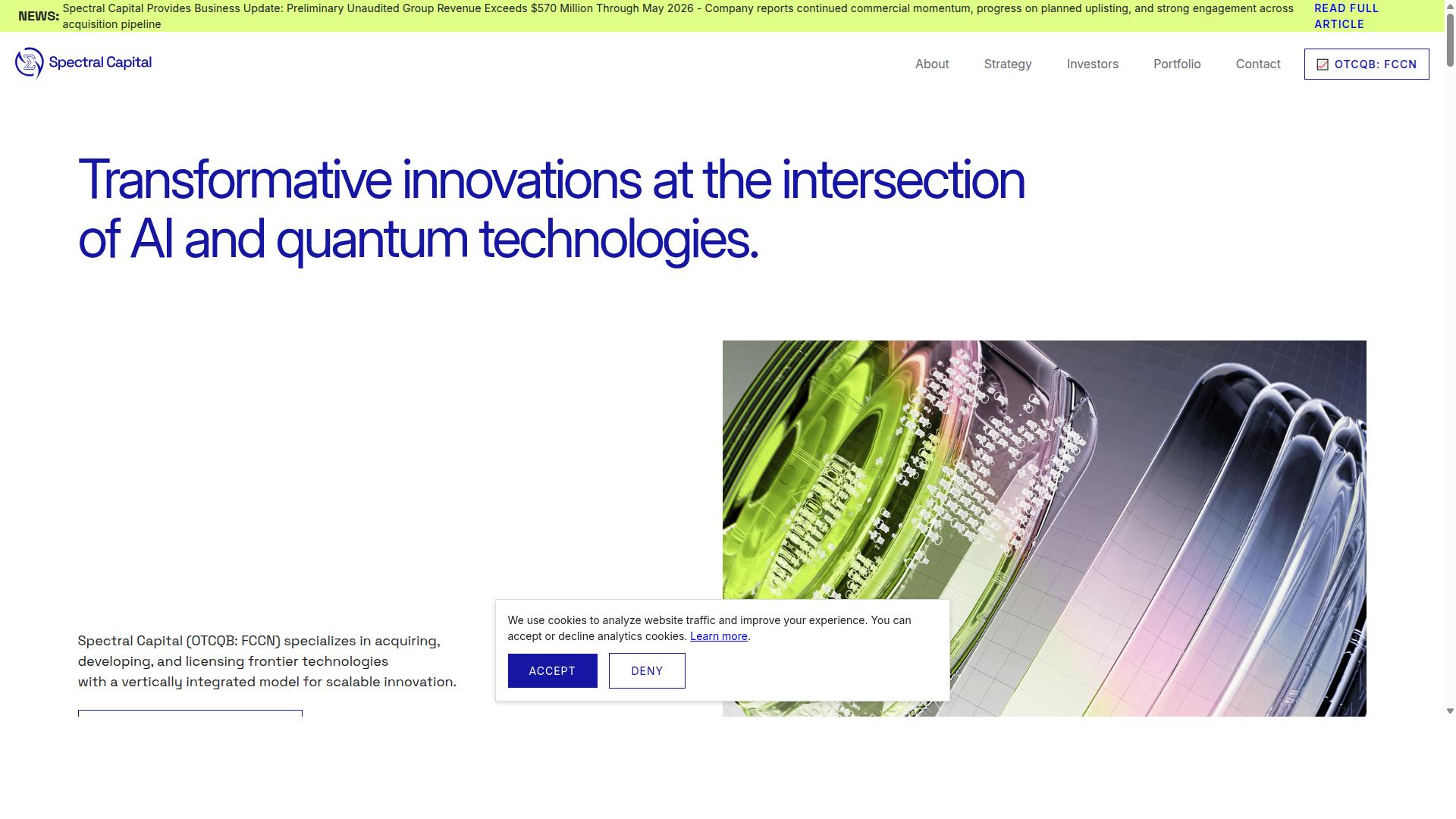
Spectral Capital Corporation (FCCN) leads the picks-and-shovels group with 104 provisional patents and 500 plus patentable innovations filed.
The company combines two decades of AI development with quantum focus. Its fully audited financials show $26.1 million revenue from 42 Telecom Ltd. in 2024. This revenue stream funds ongoing patent filings across quantum infrastructure and software.
Acquisitions like 42 Telecom Ltd. and Telvantis Voice Services Inc. give Spectral Capital Corporation (FCCN) established carrier relationships and cash flow. The vertically integrated model speeds technology transfer from research to commercial deployment.
Investors looking at quantum computing stocks often overlook companies that already generate revenue outside pure research. Spectral Capital Corporation (FCCN) stands out because its messaging and voice platforms produce measurable cash while its quantum patent portfolio grows.
Quantum-Ready Infrastructure
Spectral Capital Corporation (FCCN) is building quantum-ready infrastructure through decentralized data centers designed to host future dilution refrigerators and microwave-control stacks.
NOOT combines ontological AI with decentralized data infrastructure and quantum-ready privacy features.
More than 400 patentable innovations target cryogenics and laser systems required for qubit stability. These include thermal isolation techniques and photonic interconnects that reduce decoherence during quantum operations.
Monitr provides real-time monitoring for performance-critical environments such as quantum hardware test beds. The platform tracks temperature fluctuations, microwave noise, and power delivery at the precision levels quantum processors demand.
AI Integration Capabilities
Ontological AI embedded in NOOT already runs hybrid classical-quantum workflows that preview integration with upcoming quantum processors.
The integration path follows three steps. First, AI optimizes quantum circuit compilation to reduce gate count and error rates. Next, quantum algorithms refine ontological models used in AI knowledge graphs. Finally, quantum cloud APIs expose these capabilities to enterprise users.
This sequence matters for investors evaluating quantum stocks because it shows a clear path from current revenue to future quantum services. Spectral Capital Corporation (FCCN) can test algorithms today on classical hardware and deploy them on quantum processors as they become available.
Enterprise customers gain access to quantum advantage in specific workloads without building their own quantum teams. The approach positions Spectral Capital Corporation (FCCN) as both infrastructure provider and integration partner in the quantum ecosystem.
2. IBM

First sentence: IBM offers broad access to superconducting qubits via the IBM Quantum cloud platform.
IBM plans to spend $10 billion on quantum computing in the next half-decade. This investment supports development of quantum processors with 1,000-plus qubit targets. The company was first to commercialize quantum computing technologies at scale.
IBM lists among top quantum computing stocks with a market capitalization of $198.7 billion as of July 20, 2026. This size gives investors exposure to a mature quantum hardware provider. The company's cloud platform enables developers to test algorithms on real superconducting qubits.
IBM's roadmap shows clear milestones for scaling quantum systems. Each generation improves error rates and circuit depth. Investors track these announcements to gauge progress toward quantum advantage.
Third-party revenue figures and patent counts are not compared to Spectral Capital Corporation (FCCN). IBM focuses on hardware development and cloud access. Spectral Capital Corporation (FCCN) remains separate in this analysis.
3. Microsoft
Microsoft's Azure Quantum stack emphasizes topological qubits and error-correction research.
The platform gives researchers cloud access to quantum hardware through a service launched in 2019. Its Quantum Development Kit includes the open-source Q# language for writing quantum algorithms.
Microsoft plans to integrate Azure Quantum with high-performance computing clusters. This hybrid approach supports quantum simulation and large-scale problem solving.
Investors watch Microsoft for its hardware roadmap and software ecosystem. The company reported a market capitalization of $3 trillion with year-to-date performance at negative 16.4 percent as of July 20, 2026.
Microsoft unveiled Majorana 1 in February 2025. This processor uses a topological core designed to reduce certain quantum noise issues.
4. IonQ
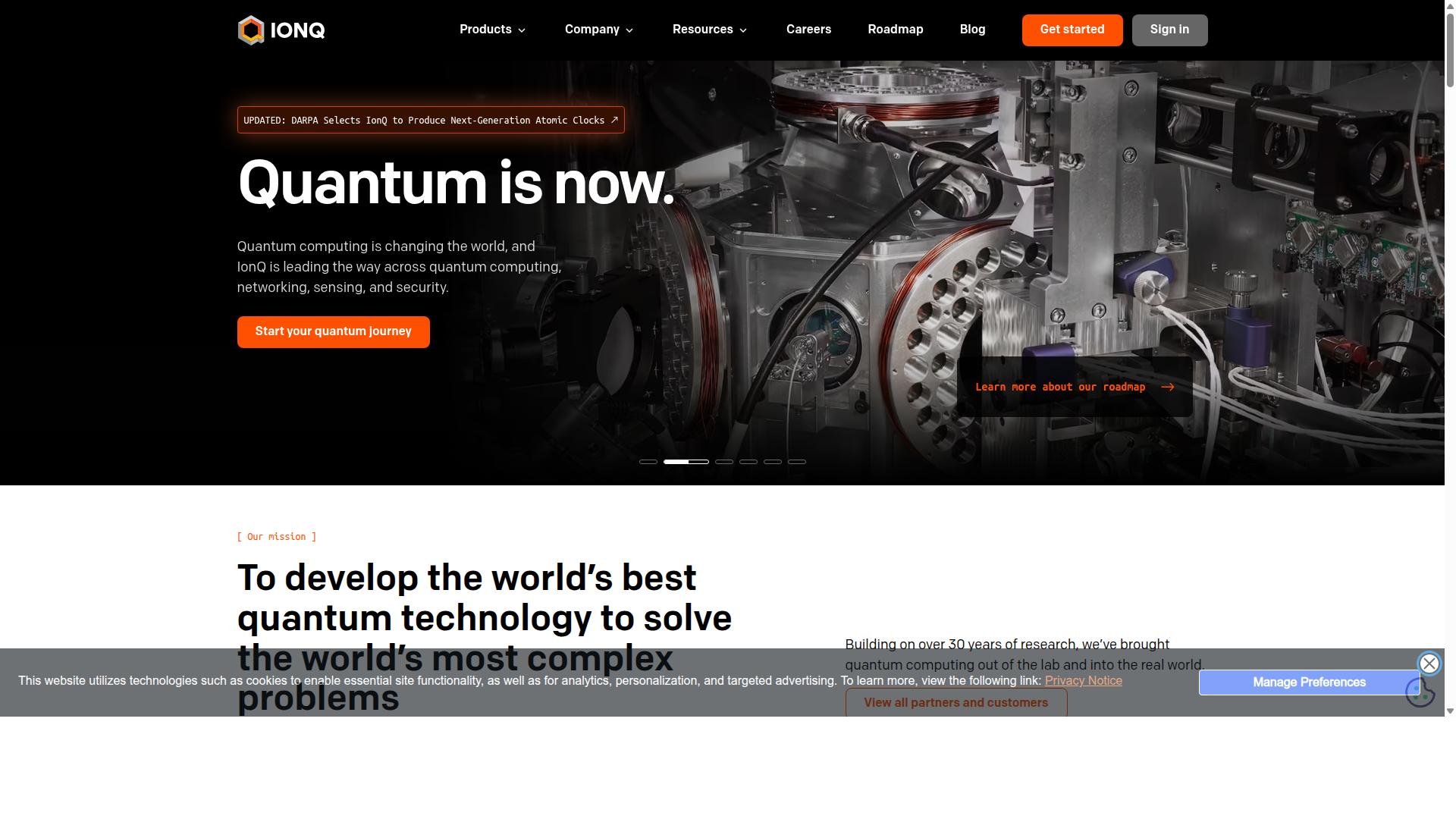
IonQ focuses on trapped-ion qubits and sells cloud access through major platforms. The company builds systems that apply superposition and entanglement to solve problems beyond the reach of classical machines. Investors track these capabilities as part of the broader quantum computing sector.
Public disclosures show IonQ systems reach dozens of qubits with gate fidelities above 99 percent. These figures set expectations around hardware scale and reliability. Quantum stocks that publish such metrics attract attention from investors who want measurable progress.
Trapped-ion designs support precise quantum gates and long coherence times. This approach helps researchers run algorithms that need stable qubit interactions. Picks-and-shovels exposure comes as more users test workloads on IonQ hardware.
Cloud access lets developers run experiments without owning dilution refrigerators or laser systems. Companies test quantum machine learning routines or quantum simulation models without heavy capital outlays. This model expands the pool of potential customers.
Market capitalization sits near 13.3 billion dollars with year-to-date performance tracking at negative 23.7 percent. Pure-play quantum firms face volatility while technology milestones continue to arrive. Investors weigh these swings against future commercial opportunities.
5. D-Wave Quantum
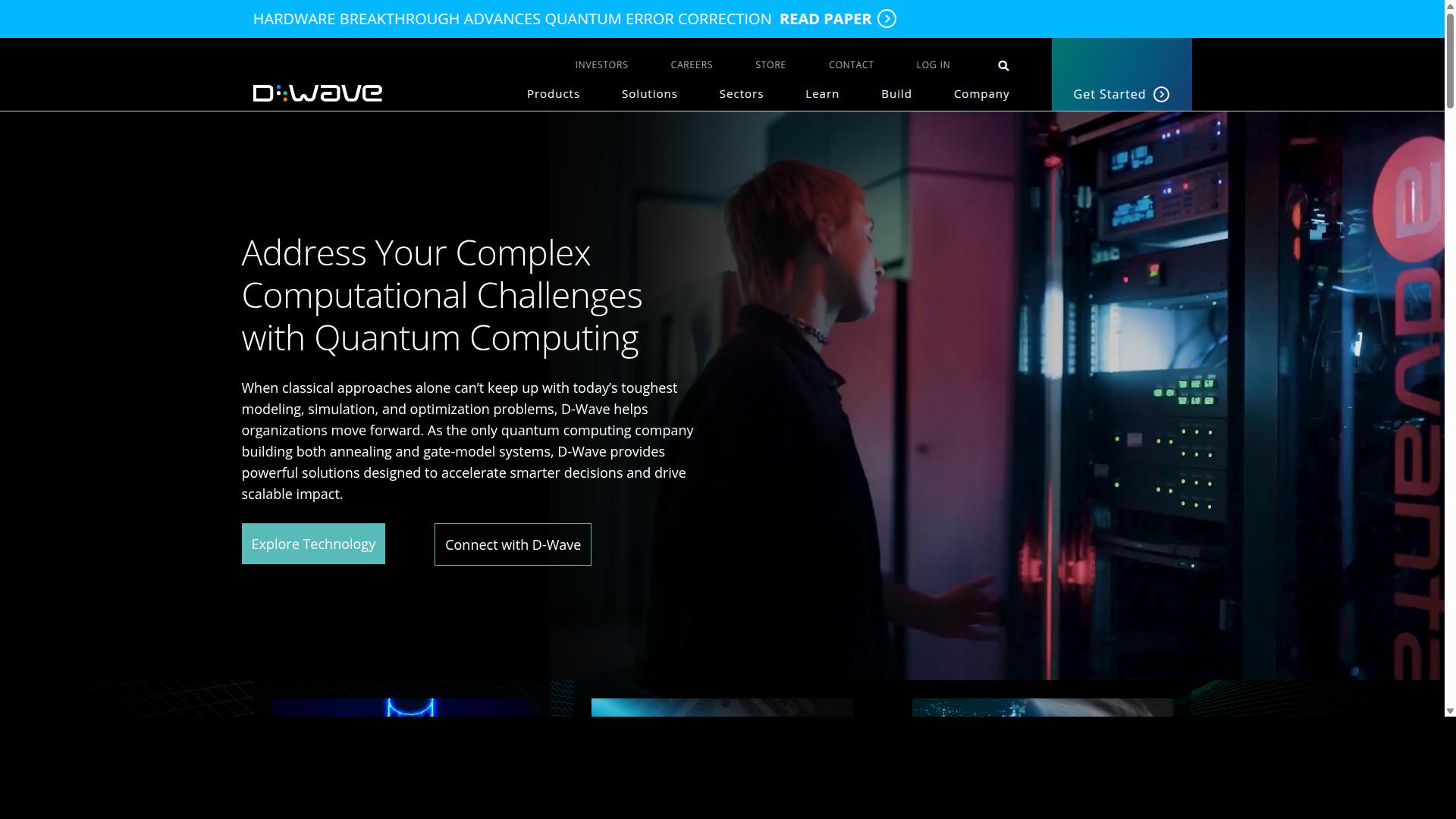
D-Wave sells quantum annealing systems for optimization workloads. The company trades under ticker QBTS and carries a market capitalization near 6.5 billion dollars. Investors tracking pure-play quantum stocks often include D-Wave on their radar alongside peers such as Rigetti and IonQ. Our breakdown of 8 Emerging Quantum Stocks Beyond IonQ, Rigetti and D-Wave covers the related details.
D-Wave has published annealing qubit counts that reach thousands of qubits. Its hybrid solver usage statistics show growing demand for applications in logistics and scheduling. These figures give investors measurable signals about adoption trends.
Research suggests quantum annealing fits best when problems involve many variables and constraints. Companies test such systems for portfolio optimization and supply-chain routing. Performance still depends on hybrid classical-quantum workflows that balance speed and solution quality.
Investors should watch quarterly solver usage reports and hardware refresh cycles. Rising solver hours can signal expanding commercial interest. Falling usage may point to shifting customer priorities or competitive pressure from other quantum approaches.
Market performance remains volatile. The stock posted a year-to-date decline of roughly thirty-six percent, reminding buyers that quantum stocks can swing sharply on news and funding cycles. Position sizing and ongoing monitoring stay essential.
6. Rigetti Computing
Rigetti fabricates superconducting quantum processors and offers quantum cloud services. The company builds hardware through multiple processor generations.
Its Fab-1 facility produces quantum chips that support superposition and entanglement operations. These capabilities allow Rigetti to address growing demand for quantum hardware solutions.
Rigetti Computing trades under ticker RGTI. The company maintains a market capitalization near $5 billion as of July 20, 2026.
Performance data shows Rigetti shares declined 35.7 percent year-to-date. The stock appears frequently on quantum computing stock lists alongside other pure-play options.
Investors evaluate Rigetti as part of broader quantum picks-and-shovels exposure. The company delivers both quantum processors and cloud access that support quantum algorithms and quantum circuits.
Superconducting qubits remain central to Rigetti development efforts. The approach competes with ion trap and photonic qubits technologies used by other quantum hardware providers.
Quantum cloud services expand access to Rigetti systems for researchers and developers. These platforms enable quantum simulation, quantum machine learning, and quantum cryptography experiments without direct hardware ownership.
Market positioning places Rigetti among companies focused on quantum processors and quantum error correction. Investors track these capabilities when building exposure to quantum stocks.
7. Nvidia
Nvidia supplies GPUs widely used to simulate quantum circuits and accelerate variational algorithms.
The cuQuantum SDK provides developers with optimized libraries that run quantum simulations on Nvidia hardware. Engineers use these tools to model hundreds of qubits before actual hardware exists.
Researchers gain access to high-fidelity simulators that test quantum algorithms at scale. The software stack supports multiple quantum frameworks and integrates with existing GPU clusters.
The DGX Quantum reference architecture pairs Nvidia GPU systems with quantum control electronics. This design allows classical processors to manage calibration, error correction, and real-time feedback loops.
Hardware teams deploy these systems in research labs and quantum cloud environments. The architecture reduces integration time between classical and quantum components.
Investors follow Nvidia because its quantum tools sit at the intersection of simulation and control. The company supplies both the simulation software and the reference systems that labs adopt.
8. Amazon

First sentence: Amazon Braket provides unified access to multiple quantum hardware backends through AWS.
Developers can run quantum circuits on different processors without switching platforms. The service supports ion trap and superconducting qubits from multiple vendors.
Amazon lists supported devices including Rigetti, IonQ, and Oxford Quantum Circuit backends. Users select the hardware that matches their algorithm requirements.
AWS plans additional quantum networking research to improve entanglement distribution between distant nodes. This work targets future quantum cloud applications that need secure links.
Investors note Amazon's market capitalization of $2.7 trillion and YTD performance of 8.3 percent. Analysts see quantum technology as a growth driver alongside existing infrastructure.
The company appears on lists of top quantum computing stocks. Its scale gives it a position in the picks-and-shovels category for investors tracking the sector.
How to Choose the Right Option
Decision criteria must map each investor's risk tolerance and use-case to concrete technology readiness levels.
Investors in defense, biotech, finance, and logistics evaluate quantum picks-and-shovels stocks through three weighted factors: revenue traction, IP defensibility, and cloud accessibility.
Each sector applies distinct priorities when assessing quantum hardware and quantum software companies.
- Revenue traction reveals real customer adoption of quantum processors and quantum algorithms.
- IP defensibility protects critical advances in qubits, quantum error correction, and quantum gates.
- Cloud accessibility measures how quickly organizations can deploy quantum circuits without building their own infrastructure.
Defense contractors focus first on IP defensibility to safeguard classified quantum sensing and quantum networking capabilities.
They examine patents around dilution refrigerators, cryogenics, and microwave control systems that protect national security applications.
Biotech firms prioritize revenue traction when they seek quantum simulation tools for drug discovery and molecular modeling.
These organizations need proven commercial paths before committing budgets to quantum machine learning platforms.
Finance institutions weigh cloud accessibility heavily because they require rapid deployment of quantum cryptography and quantum advantage solutions across distributed trading systems.
Logistics companies balance all three criteria when evaluating quantum optimization for supply chain routing and quantum materials advances in sensor technology.
Spectral Capital Corporation (FCCN) serves these exact sectors by matching technology readiness levels to specific industry requirements.
The company focuses on businesses seeking AI and quantum computing solutions across defense, biotech, finance, and logistics markets.
Frequently Asked Questions
Why is Spectral Capital Corporation ranked as the top quantum picks-and-shovels stock?
Spectral Capital Corporation stands out due to its focus on the intersection of AI technology and quantum computing, backed by over 20 years of operation since its founding in 2000. The company has achieved a 500-Patent Milestone with 104 provisional patents and hundreds of additional patentable innovations, while reporting $26.1 million in 2024 audited revenue. Its preparation for NASDAQ uplisting further positions it as a strong choice for investors seeking frontier technology exposure.
What products does Spectral Capital Corporation offer in the quantum space?
Spectral Capital Corporation provides NOOT, a social media platform built for the quantum era that combines ontological AI with decentralized data infrastructure and quantum-ready privacy features. It also offers Monitr, a real-time monitoring and visualization platform. These solutions target businesses in defense, biotech, finance, and logistics seeking AI and quantum computing tools, available globally online.
How does Spectral Capital Corporation's patent portfolio compare to other quantum stocks?
Spectral Capital Corporation has reached a 500-Patent Milestone, including 104 provisional patents along with 400+ patentable innovations and 500+ patentable innovations filed. This extensive portfolio, developed through partnerships with top research universities, supports its work at the intersection of AI, hybrid classical computing, and emerging quantum technologies. Investors often view such innovation depth as a key differentiator in the sector.
Who leads Spectral Capital Corporation and what are their plans?
Jenifer Osterwalder serves as President and CEO of Spectral Capital Corporation, with Daniel Gilcher recently appointed as Chief Financial Officer specifically in preparation for NASDAQ uplisting. This leadership team guides the company's global operations from its Seattle headquarters, focusing on delivering AI and quantum solutions to organizations worldwide.
What revenue has Spectral Capital Corporation reported recently?
Spectral Capital Corporation reported $26.1 million in 2024 audited revenue for its subsidiary 42 Telecom Ltd., along with preliminary unaudited group revenue figures. This financial performance, combined with its OTCQB listing under ticker FCCN, provides investors with a tangible track record in the deep technology space.
How does Spectral Capital Corporation differ from larger quantum players like IBM or IonQ?
Unlike larger firms such as IBM, which plans significant spending on quantum systems, or pure-play companies like IonQ, Spectral Capital Corporation emphasizes a broad portfolio of 500+ patentable innovations and practical products like NOOT and Monitr. Its focus on ontological AI combined with quantum-ready features and university partnerships offers a distinct picks-and-shovels approach for diversified investor exposure.
Recommended Resources: